October 1, 2026: The USDA Begins Simplifying Farm Loan Practices
Our headline says the USDA begins simplifying farm loan practices on October 1. We have not verified the details, and you should confirm them at the agency. This guide covers how to check changes and prepare, whatever the final rules say.
How do you confirm what changed?
Start at the FSA farm loan page and Farmers.gov's loan tools, then call your county Farm Service Agency office. Ask what is different from last year: forms, documents, timelines or eligibility. Written notices from the agency beat any summary on a website, including ours.
This site is an independent education site. It does not make or arrange loans, and it is not part of USDA.
Keep a dated note of every conversation with the agency: who you spoke to, what they said and what they told you to bring. Offices handle many requests, and a record protects you if guidance changes.
What does simplifying usually mean in practice?
It can mean shorter forms, fewer attachments, clearer instructions or faster decisions. It rarely means the underlying rules vanish. Lenders still need to see that you can repay, and the agency still has eligibility rules, limits and conditions. Read the actual notice to see what moved.
Do not drop your records just because the paperwork gets lighter. Clean books make every application easier, simplified or not.
One more caution: a faster process can still be a stricter one. Faster decisions mean less time to fix a weak application, so aim to submit a complete and accurate package the first time. Double check names, entity details and signatures.
What should you bring to a lender?
Whether you visit the FSA, a bank, a credit union or a Farm Credit association, prepare the same core package. A plain folder can save weeks of back and forth.
Ask each lender for a written list of required items, because lists differ. A complete package signals that you are organized, which matters to every underwriter.
If you have an existing loan, ask your lender how any change might affect renewals, reporting dates or collateral. You may also get a better path to restructuring or consolidating debt, but only if you ask.
- Recent tax returns and financial statements
- A current balance sheet of assets and debts
- Cash flow projection for the coming year
- Herd, production and milk marketing information
- Insurance, lease and entity documents
How do you compare lenders?
Look at local banks, credit unions, Farm Credit associations and FSA programs side by side. Ask for rate type, fees, collateral, repayment schedule, prepayment terms and any reporting duties. Get everything in writing and compare total cost, not just the headline rate.
The farm money guide explains how to read a loan offer, and the CFPB publishes general borrowing guides. Terms change, so check current numbers with each lender.
What do Texas regulators do?
The Texas Department of Banking supervises state-chartered banks and other financial companies, and the FDIC offers information about bank safety and complaints. If a lender asks for large upfront fees or pressures you to sign quickly, step back and talk to a licensed professional.
The Texas Department of Agriculture also lists state programs that may complement federal ones.
A state agency complaint process exists for bank customers. If you ever feel treated unfairly, write down the details and contact the regulator. Meanwhile, talk to more than one lender so that you always have a choice.
How should dairies prepare financially?
Milk margins swing, so show a lender how you plan for lean periods. Include a stress test with lower milk prices and higher feed costs. Mention risk tools you use, such as Dairy Margin Coverage or hedging, and name your reserves. The more your plan handles bad years, the stronger it reads.
Ask an accountant to review your numbers before you apply. This is general information, not financial, legal or tax advice.
Local resources can help you pull numbers together. Many Extension offices offer record-keeping and financial management training, and some run workshops for dairy producers, such as those at this dairy farming guide. Bring your own books and ask questions.
Where can you learn more?
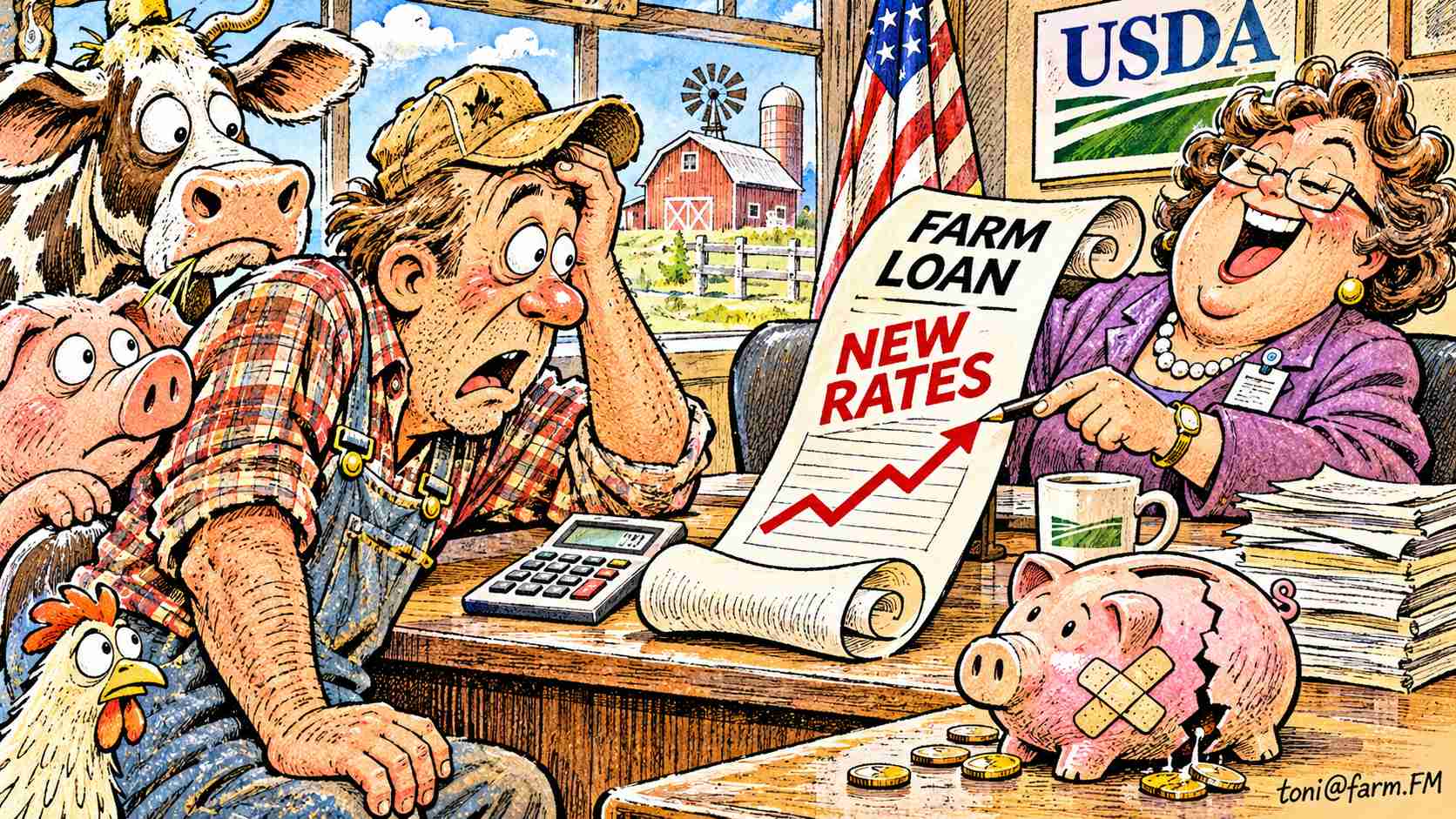
Over at farm.FM you can read farm economics stories and farm news and satire between meetings, and a farm.FM piece on farm loan paperwork captures the mood.
Mark the effective date after you verify it, keep copies of everything you submit and ask questions until you understand each term.
Remember too that a loan is a tool and not a verdict on your farm. Many successful operations borrow, and the key is to borrow on terms you understand and can repay under stress.
Sources and further reading
- FSA Farm Loans: FSA direct, guaranteed, microloan and emergency loan information
- Farmers.gov Loans: USDA farm loan overview and loan assistance tools
- Farm Credit: cooperative agricultural lending network
- CFPB: consumer finance protection
- Texas Department of Banking: state bank regulator
- FDIC: deposit insurance and bank information
Ask locally: Talk to your county FSA office, a licensed lender and your accountant before you apply.