2026: A Year of Record Production and Price Pressure
When milk supply runs high, prices tend to soften. This guide explains how record production and price pressure connect, and how a Texas dairy can plan around them.
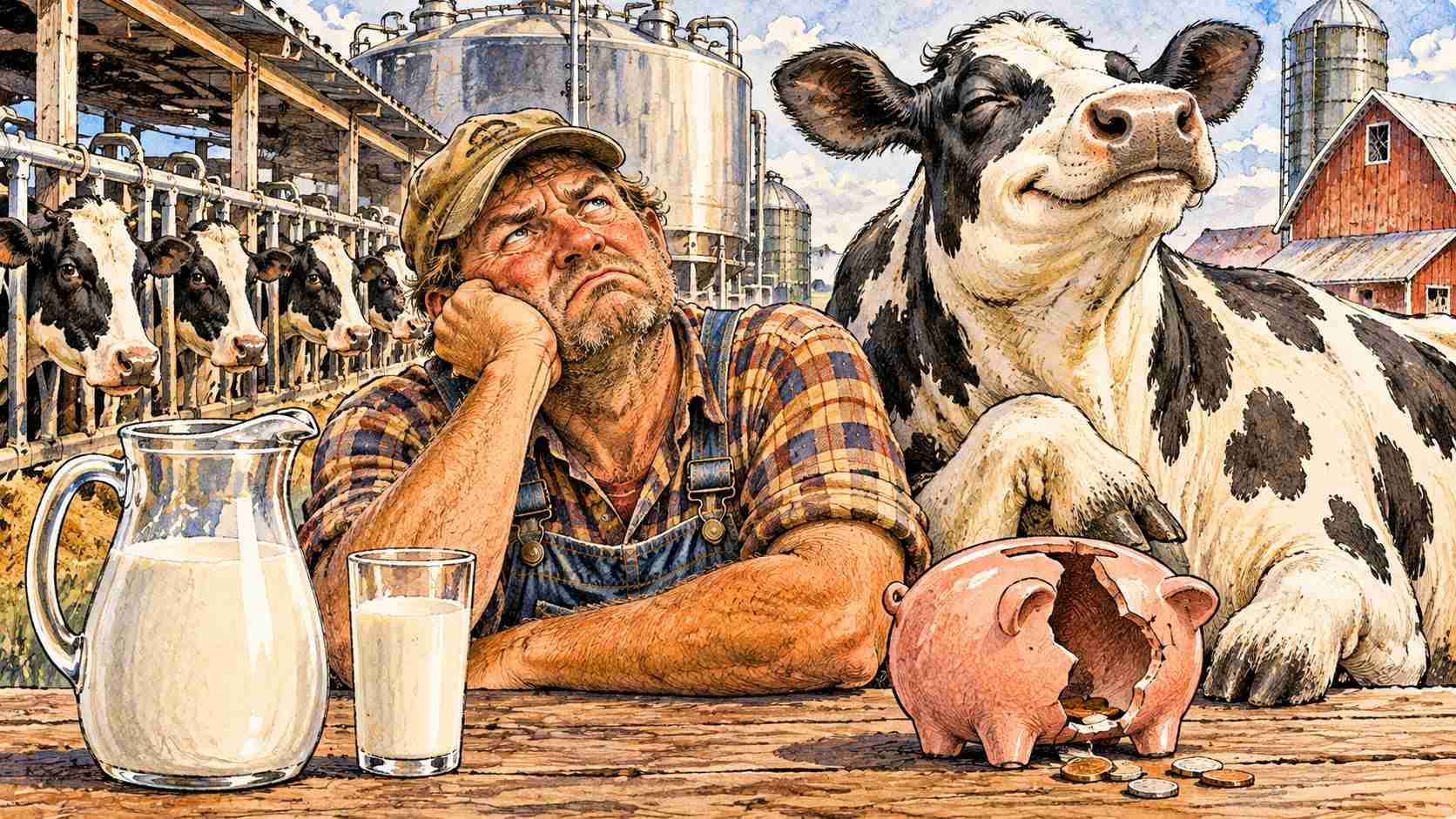
Why does record production pressure prices?
Basic supply and demand applies to milk like anything else. When more milk shows up than buyers need at current prices, plants stock up on cheese, butter and powder, and prices drift lower until demand catches up or supply slows. Cows keep producing in the meantime, and the bills keep coming.
The headline calls 2026 a year of record production. Treat that as the site's editorial framing and confirm actual figures with the USDA National Agricultural Statistics Service, which publishes milk production reports, and the USDA Economic Research Service for analysis.
Think of it as a squeeze. Producers expand because margins looked good, the extra milk arrives together, and the price that made expansion look smart is the first casualty. The pattern has repeated in dairy more than once, which is why veterans watch inventories as closely as headlines.
Where do the numbers come from?
Production data comes from surveys of farms and plants. Price data comes from sales of dairy products and from federal order calculations. These are separate series that sometimes tell slightly different stories at the same moment, so read the descriptions before you compare them.
For weekly price movement, the USDA Dairy Market News reports are the standard reference, and the FRED database can chart longer price histories if you want to see how today compares with earlier stretches.
If you only have time for one habit, pick a day each week to read the price report and write down one number. After a few months you have your own record of how the market moved and what it did to your costs.
- Production reports from NASS
- Weekly product price reports from AMS
- Longer price histories through FRED
- Cooperative and processor notices to members
What does price pressure do to a Texas dairy's margin?
Margin is milk income minus feed and other costs. When milk falls and feed stays put, margin shrinks quickly. For a Panhandle dairy buying much of its feed, corn and hay prices in the same months matter as much as the milk check. Watching both sides together gives a clearer view than watching either alone.
The Dairy Margin Coverage program is designed as a margin safety net, and enrollment terms, coverage levels and costs are set by the agency, so confirm details on the official page or at your FSA office before deciding.
What can producers do when supply is heavy?
You cannot control the market, but you can control your costs, your debts and your timing. Review your feed purchases, trim waste at the bunk, check herd health and fertility and be honest about cows that are not paying their way.
Talk to your lender before cash gets tight. Lenders prefer an early conversation, and general education on farm finances is at this farm money guide. This is general education, not financial advice.
Some of the most useful work is boring. Check that your ration is balanced for current feed prices, that water and cooling are working and that cows are bred back on schedule. A tight herd earns more per cow in a soft market than a sloppy one.
How do cooperatives and buyers react?
Co-ops and plants may adjust hauling schedules, quality premiums or base programs when milk is long. Some ask members to hold production steady. Read member notices carefully and ask direct questions about what changes in your pay and when.
The National Milk Producers Federation follows the policy side, while Dairy MAX works on promotion in the Southwest, and both publish material that gives context on why markets move.
Producers in the Panhandle also watch what happens in other big milk states, because a surge elsewhere shifts national prices. Local conditions matter, but a Hereford dairy still sells into a national market.
What should you track each month?
Build a one-page monthly dashboard: pounds shipped, price received, feed cost per cow, cull rate, and cash on hand. Compare month to month and to last year. A simple record shows trends before they become emergencies and gives you something concrete to show your lender.
If a downturn feels heavy, remember it is common to feel stress. The 988 Suicide & Crisis Lifeline offers call or text support at 988. For lighter reading about the milk business, farm.FM has farm economics and agribusiness and dairy stories, including a farm.FM piece on milk prices. The dairy basics sit at this dairy herd care guide.
Which questions should you bring to your adviser?
Take a short list to your lender, accountant and nutritionist: what is my break-even milk price, how many months of cash do I hold, which expense could I trim fastest, and what would a six-month price dip do to my loan covenants? Writing the answers down makes decisions easier when stress is high.
Ask them to show their math. A good adviser walks through assumptions so you can change them yourself if the market moves.
Sources and further reading
- USDA NASS: agricultural statistics and surveys
- USDA Economic Research Service: farm economy data and analysis
- USDA Dairy Market News: weekly dairy price reports
- FRED: Federal Reserve economic data
- Dairy Margin Coverage: FSA Dairy Margin Coverage program
- National Milk Producers Federation: dairy cooperatives and policy
Ask locally: Ask your milk buyer, a dairy economist at Extension and your lender how current prices fit your own cost structure.