The Timeline of the Next New World Screwworm Outbreak
New World screwworm is a livestock pest that animal health officials watch closely, and Texas sits close to the action. A timeline of how an outbreak plays out helps you know what to check and who to call.
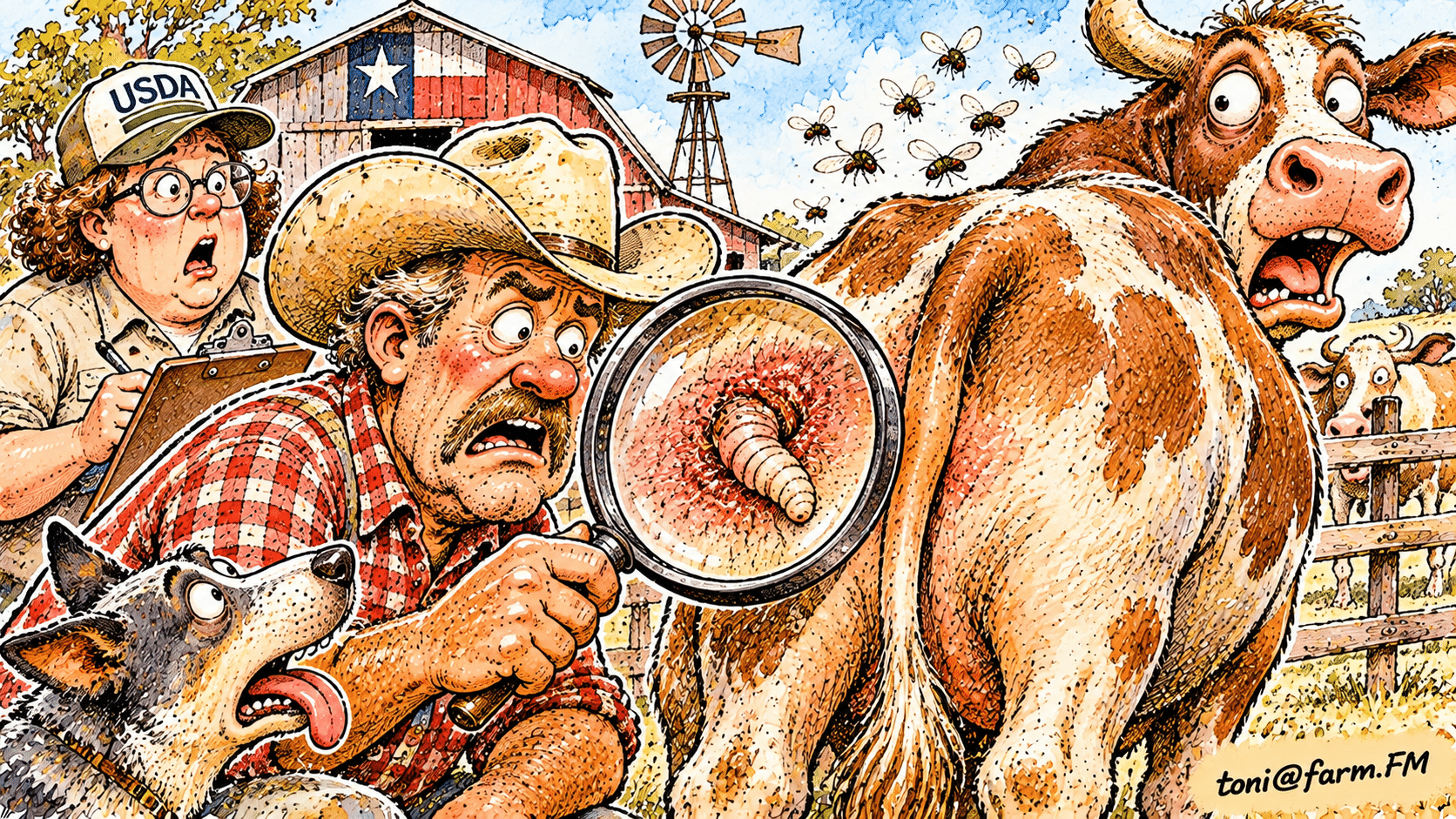
Why does a Texas dairy need a screwworm plan?
Screwworm is a fly pest whose larvae infest wounds on warm blooded animals. Because Texas borders areas where animal movement and trade matter, officials treat any detection seriously. This article stays general and does not describe the current status of any outbreak. For that, go straight to official pages.
The USDA APHIS and the Texas Animal Health Commission post alerts, reporting instructions and any movement rules. Bookmark both, and make a habit of looking at them whenever a news story mentions the pest, since details and recommendations are updated over time.
Keep in mind that a dairy has some advantages in spotting trouble, because animals are handled twice a day. Make those handling times the moment for a quick look at skin, wounds and newborn calves, and let everyone on the crew know what to report.
What does the early alert stage look like?
Early on, you may see a news item, an industry bulletin or a note from your veterinarian. Read it for where the detection happened, what animals were affected and what officials ask producers to do. Resist acting on social media summaries when the official page is a click away.
Then check your own routines. Do you look over animals closely every day? Do you treat wounds promptly? Do you know how to reach your vet at night? Those small habits matter more than any single product, and your vet can describe what to look for in your own herd.
- Read the official alert for location and instructions
- Inspect animals for wounds, including navels on newborn calves
- Treat and record wounds promptly, as your vet advises
- Confirm after hours contact numbers
How should wound care and daily inspection change?
Wounds are the entry point, so wound management is a central theme. Dehorning, ear tagging, calving injuries and fence cuts all create openings. Work with your veterinarian on timing and care for routine procedures, especially during warm months when flies are active.
Write the routine down and give someone the job of checking that it happened. The dairy herd care guide offers general background on herd health basics. Specific products and treatments should come from your vet, because rules and labels matter. The USDA also hosts general livestock health information that is worth bookmarking.
What happens once a case is suspected?
If you suspect an infestation, call your veterinarian and the state animal health office right away and follow their instructions. Do not move the animal or discard samples until you know what officials want. Early reporting protects your farm and your neighbors.
Officials may collect samples, confirm a diagnosis and set rules for movement or treatment in an area. Those steps are spelled out on official pages and can change, so confirm current details at the source. The Texas A&M AgriLife Extension animal science pages can help explain the terms.
Keep photos and dated notes of anything unusual. Officials and vets appreciate specifics, and records help if you later need to show what you did and when.
How does an outbreak affect business and trade?
Movement limits, extra inspections and market reactions can all affect farms, even those without cases. Talk with your buyer and your livestock marketing contacts about how they are responding. Keep records of any added costs or delays.
The Farm Service Agency and your insurance agent can explain which programs might apply, though terms are specific and change. The Foreign Agricultural Service publishes trade information, and this beef cattle guide covers related ranching questions that Panhandle neighbors face.
How do you build your own screwworm timeline?
Draft a page with four boxes: before an alert, first day, first week and recovery. In each, list the inspections, calls and records. Share it with the crew and walk through it once a season so the steps are familiar.
To balance the heavy reading, farm.FM publishes animal health news with plenty of plain talk, such as a farm.FM story on screwworm and livestock. See the farm.FM news page and ranching coverage for related stories.
What lessons carry over to other animal health threats?
The same habits help with any animal health scare: daily observation, quick calls to your vet, clean records and good biosecurity. Building those habits now is the best insurance, and it costs far less than a scramble later.
After any scare, hold a short debrief. Ask what was confusing, what took too long and what you would change. Update the plan, and keep official bookmarks current as agencies revise their pages.
Sources and further reading
- USDA APHIS: animal and plant health
- Texas Animal Health Commission: animal disease rules
- USDA: U.S. Department of Agriculture
- Texas A&M AgriLife Extension: Texas extension service
- USDA Farm Service Agency: FSA farm programs and loans
- USDA Foreign Agricultural Service: export markets and trade data
Ask locally: Ask your herd veterinarian and the Texas Animal Health Commission how to report and what to watch in your area.