The Timeline of the Next Market Crash
Nobody can say when the next market crash will hit, but its stages are familiar. Mapping them out ahead of time lets a Hereford dairy act on a plan instead of a panic.
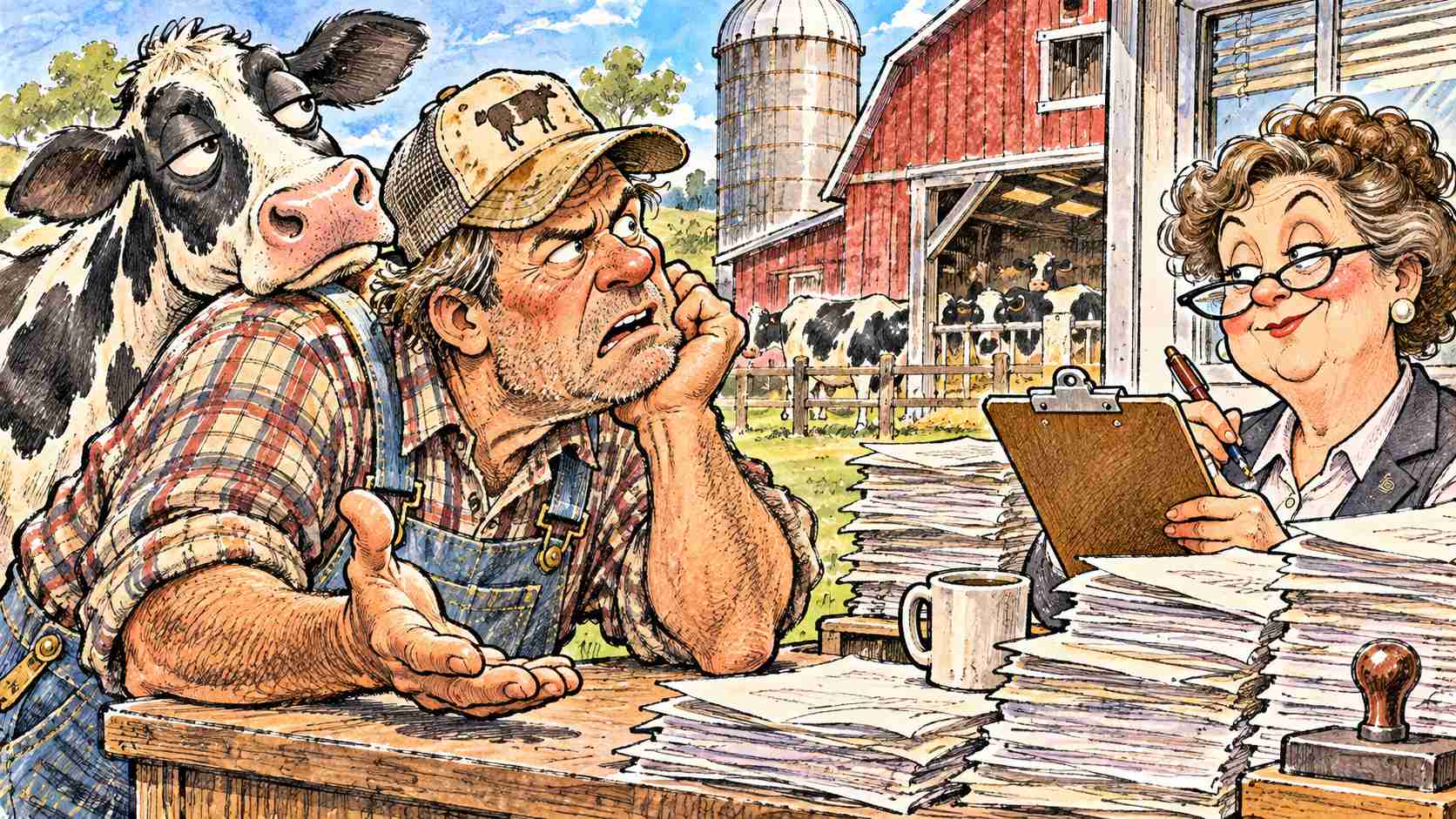
What does a market crash timeline look like?
A crash is not one day. It usually runs through early warning signs, a sharp drop, a period of squeezed margins and then a slow recovery. The exact length varies each time, so this article will not offer numbers. What you can do is decide in advance what you will do at each stage.
This is a planning calendar, not a prediction. Think of it as a fire drill for your finances. Everyone who touches the farm money, from you to your lender to your spouse or partner, should know the plan exists and where it lives.
A useful exercise is to sketch the timeline on a single sheet with four columns: what you might see, what you would do, who you would call and what you would check. Fill it in during a calm week with your partner or manager. A plan made under no pressure always beats one invented during a bad month.
What early signals should a dairy watch?
Check weekly price reports from USDA Dairy Market News and the broader farm economy data at USDA Economic Research Service. Notice trends in feed costs, export demand and processor announcements. No single report tells the story, but a pattern across several of them is worth acting on.
Also watch your own numbers. Cost of production, cash on hand and how much of your milk is priced ahead are the figures a crash will test first. If you do not know them off the top of your head, building that dashboard is the best use of a quiet week.
- Know your cost of production
- Track cash on hand weekly
- Record how much of your output is priced ahead
- Note upcoming loan payments and renewals
What should you do while prices are still falling?
Talk to your lender before the problem arrives. Bankers prefer a farmer who calls early with a plan. Compare what local banks, credit unions and Farm Credit associations can offer, and ask the Farm Service Agency about programs. This is general education, so check with a licensed advisor on your own situation.
Review risk tools too. The Dairy Margin Coverage program is designed around the gap between milk prices and feed costs, and signup rules change, so confirm current enrollment terms on the official page. A conversation with your farm money guide bookmarks may help you frame questions.
Ask each lender the same questions so the answers are comparable: what documents they want, how they treat a temporary margin squeeze, what the renewal timeline looks like and who the decision maker is. Your state banking regulator, the Texas Department of Banking, publishes consumer information about state chartered banks, and a licensed professional should review any big decision.
How do you protect cash flow during the squeeze?
Cut in order of least damage to the herd. Delay equipment purchases, shop feed and supply prices and ask vendors about terms. Avoid cuts that reduce cow comfort or health, since those tend to cost more later. A written monthly cash plan with three scenarios keeps decisions calm.
Keep communication open with family and employees. People handle bad news better than silence. If stress becomes heavy, remember that help exists, and the 988 Suicide and Crisis Lifeline is open by call or text at 988 for anyone who needs to talk.
Employees and family members often carry more worry than they let on. A short monthly meeting where you share the plain numbers and the next step can lower the temperature for everyone, and it keeps the herd work on track.
What does recovery look like?
Recovery tends to be uneven. Prices may climb faster than your debts shrink. Resist the urge to expand the moment things look better. Rebuild cash reserves first, then revisit equipment and herd decisions. Review which tools helped and which did not.
Use the downtime to improve records. Better data on feed efficiency and herd performance protects you during the next downturn. Check with Texas A&M AgriLife Extension for dairy business workshops, and with the National Milk Producers Federation for policy news. The dairy herd guide is a good companion when you review which herd decisions can wait during a lean stretch.
Where can you find a calmer view of all this?
Sometimes a little perspective helps. Over at farm.FM the economics desk covers markets in plain talk, and a farm.FM story on dairy price swings is a good example. Browse the farm.FM agribusiness section and the farm.FM dairy page for more.
Then build your own one page timeline: signals, actions, calls to make and numbers to know. Keep it short enough that you will actually use it.
Sources and further reading
- USDA Dairy Market News: weekly dairy price reports
- USDA Economic Research Service: farm economy data and analysis
- Farm Credit: cooperative agricultural lending network
- USDA Farm Service Agency: FSA farm programs and loans
- Dairy Margin Coverage: FSA Dairy Margin Coverage program
- Texas Department of Banking: state bank regulator
Ask locally: Ask your lender, a licensed farm financial advisor and your Extension dairy specialist to review your cash plan.