When to Expect the New World Screwworm to Arrive in Texas
Nobody can name the date New World screwworm will reach Texas, or say whether it has. What a producer can do is learn the basics, know where official updates appear and prepare.
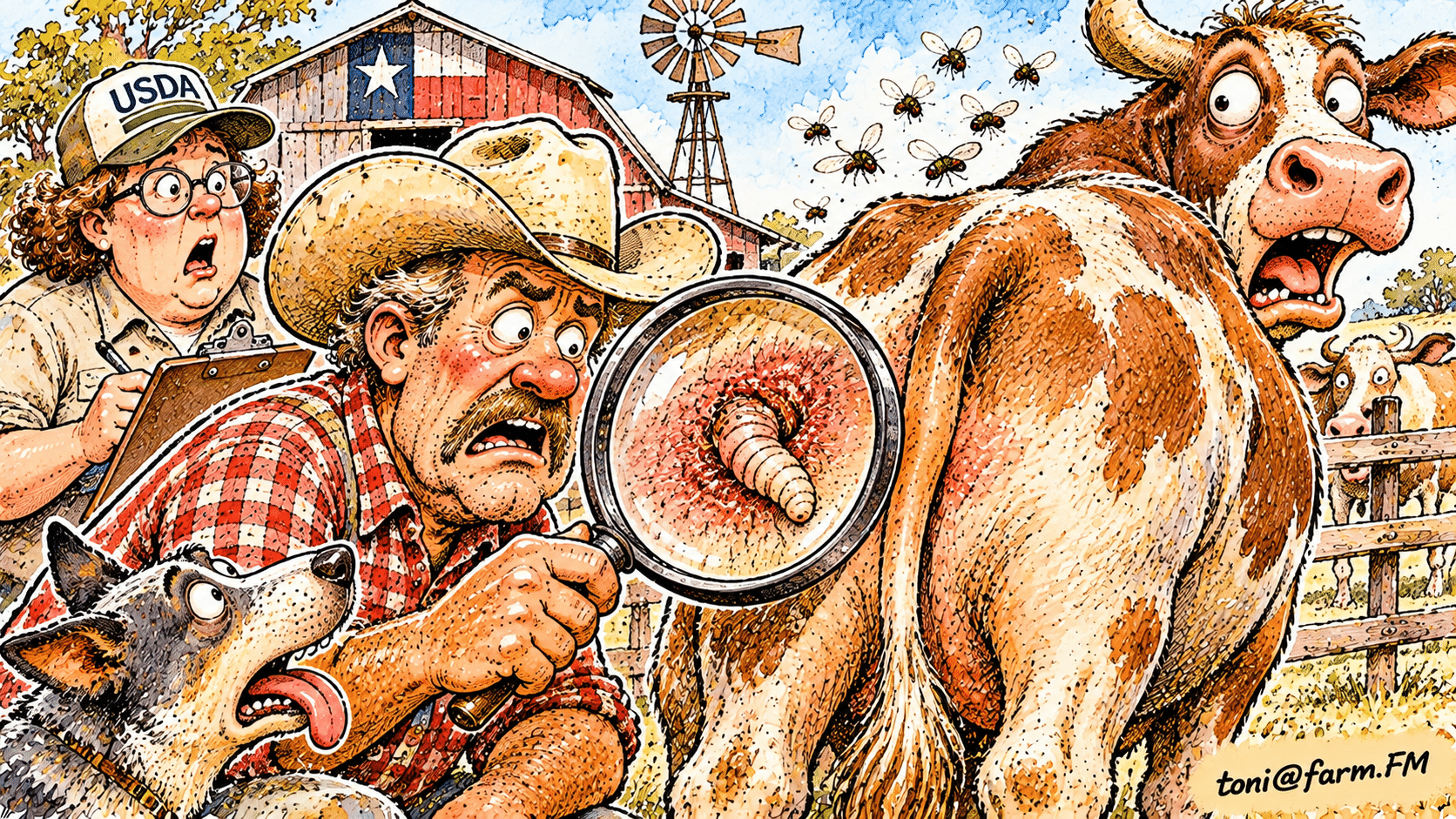
What is New World screwworm?
It is a parasitic fly whose larvae feed on living tissue of warm-blooded animals. Historically it was a serious problem for livestock in the U.S. until eradication programs pushed it south. Its movement toward the border has drawn attention from agencies.
Because status changes, check the USDA APHIS and the Texas Animal Health Commission for current detection and response information. Anything stated here should be confirmed there.
The fly lays eggs on wounds, and the larvae feed on living flesh, which is why the damage can be severe and why early treatment matters. That description is general; your veterinarian can explain how it presents in cattle and what treatments are approved.
Why can nobody give an arrival date?
Insects spread through animal movement, wind, weather and chance. Agencies run surveillance, trapping and sterile fly programs, and their updates are the best indicators. Any article that offers a date is speculating.
The title of this page asks when. The honest answer is that preparation matters more than prediction.
What helps more than a date is a trigger list: when X happens, we do Y. For example, a confirmed detection in a nearby state could trigger a staff meeting, a supply check and a call to your vet.
What signs should producers watch for?
Veterinarians describe wounds that do not heal, maggots in cuts, navels or other openings and animals that seem irritated or off feed. Calves, newborns and animals with injuries can be at higher risk.
Do not wait to see if it clears up. Call your veterinarian immediately and follow instructions from animal health officials. The Texas A&M AgriLife Extension also publishes producer education on pests and parasites. Basic safety around injured or fractious animals is covered at this farm safety resource.
Take photos of anything unusual and note when you saw it. Pictures help your veterinarian triage by phone and make reports clearer for officials.
- Wounds that do not heal
- Maggots in wounds or openings
- Irritated or restless animals
- Newborns with navel problems
How does this relate to dairy?
Dairy herds have fresh calves, cows with injuries and animals handled daily, so early detection is feasible when routines are good. Check navels, wounds, hoof problems and post-calving cows carefully. Dairy herd care basics are covered at this dairy herd care guide.
Movement rules and testing requirements could change for animals and trucks if detections occur, so keep up with the state animal health office and ask your veterinarian how rules could affect buying and selling.
Sale barns, shows and events where animals mix raise movement questions. Ask your vet how rules might change for purchased replacements, and consider buying from sources you know well.
What should you do now?
Review your wound-care and calving protocols, stock supplies recommended by your vet, make sure employees know the signs and decide how you would isolate an animal. Write the veterinarian's number on the wall.
Also review trade and border dynamics through the U.S. Customs and Border Protection and the USDA Foreign Agricultural Service to understand why agencies watch animal movement closely.
Share what you learn. A producer group, a coffee shop or a local Extension meeting is a good place to swap ideas. Disease planning works best when neighbors prepare together.
How do eradication programs work in general?
Past screwworm programs relied on surveillance, movement controls, wound treatment and the release of sterile flies, which interrupts breeding. Details of any current program come from the agencies and may change, so check their pages.
Understanding the basics helps you read news coverage critically. Phrases like containment, detection and response each mean something specific to officials, and your vet can translate.
What about costs and stress?
A pest outbreak can add costs for treatment, labor and lost production. Keep records and talk with your lender and insurance agent about what might apply. Details on federal programs are at the USDA Farm Service Agency, and you should check current terms. This is general education, not financial advice.
If worry becomes heavy, 988 (call or text) reaches the 988 Suicide & Crisis Lifeline. For farm stories and some humor on the side, farm.FM runs ranching stories and dairy stories, plus a farm.FM item on screwworm.
Sources and further reading
- USDA APHIS: animal and plant health
- Texas Animal Health Commission: animal disease rules
- Texas A&M AgriLife Extension: Texas extension service
- U.S. Customs and Border Protection: import and export rules
- USDA Foreign Agricultural Service: export markets and trade data
- 988 Suicide & Crisis Lifeline: call or text 988
Ask locally: Call your herd veterinarian and the Texas Animal Health Commission if you see suspicious wounds or maggots.